In 1998, I walked across the stage at Asbury Theological Seminary to receive my Master of Divinity degree. It was a four-year program—long, demanding, and stretching in every way. But what I received that day was far more than a diploma.
I received confirmation of a calling.
Going to seminary was not an easy decision. At the time, I had a well-paying job as an engineer in the Sultanate of Oman. My employment at Sultan Qaboos University provided everything my family needed for a comfortable life—good salary, free housing, medical and dental benefits, and forty-five days of paid leave each year. The university even covered airfare for our family. By every practical measure, we were secure.
Leaving that behind did not make financial sense.
But the desire to be equipped for God’s work burned stronger than the comfort of stability. So in 1994, we packed our suitcases and flew to Wilmore, Kentucky—not just relocating geographically, but stepping out in faith.
Edita enrolled alongside me in the Master of Biblical Studies program. We were both students again. We were both trusting God.
Between the two of us, Edita worried more about finances than I did. As a mother and provider at heart, she carried the weight of uncertainty deeply. There were moments when the future seemed fragile.
One day, I came home and found her crying.
Alarmed, I asked if something terrible had happened back home in the Philippines. She shook her head and quietly pointed to her open Bible.
She had been reading in the Gospel of Mark about the twelve disciples. After witnessing Jesus feed the five thousand, they later argued and blamed one another for not bringing bread with them as they crossed to the other side of the lake. They were anxious about having no food—even though the Miracle Worker Himself was in the boat with them.
Through tears, Edita said, “I am like them. They just saw Jesus feed five thousand people, and yet they worried about bread. Jesus was with them. And here we are worrying about finances when God called us here.”
Her words pierced both our hearts.
Right there, beside our bed, we knelt and confessed our lack of faith. We surrendered our anxieties to the Lord. We asked Him to arrest our doubts and replace them with trust.
That moment marked a turning point.
From then on, we refused to allow worry to distract us from what God had called us to do. The financial questions did not disappear overnight—but fear lost its grip. Peace settled in its place.
And just as He promised, God sustained us.
Provision came in many forms. Needs were met. Tuition was covered. Groceries filled our pantry. We were never abandoned. We experienced firsthand the truth of His promise:
“I will never leave you nor forsake you.”
Seminary became more than a place of academic training. It became a classroom of faith.
While I studied theology and prepared for pastoral ministry, God was shaping our hearts as a couple. We were learning not only doctrine—but dependence.
In 1998, I graduated with my Master of Divinity. And Edita, through perseverance and faith, earned her Master’s degree in Biblical Studies.
We left Wilmore not only with degrees—but with deeper trust.
Looking back now, I see that season as one of the defining “high five” moments of our lives—a chapter where obedience replaced comfort, faith replaced fear, and grace sustained us daily.
In my AI video, I’m walking beside a lion along a quiet river in a paradise-like place. The lion represents Jesus, and that image is deeply biblical. Scripture portrays the Messiah not only as gentle and near, but also as strong, royal, and victorious—“the Lion of the tribe of Judah.” Jacob’s blessing over Judah describes a lion-like ruler whose authority would endure (Genesis 49:9–10), and Revelation names Jesus as that Lion who has conquered and is worthy to open what no one else can (Revelation 5:5). A lion is a fitting likeness because it symbolizes courage, kingship, and triumph. Jesus is not merely a teacher who comforts; He is the King who overcomes sin and death.
I’m dressed in pure white, which reflects what Jesus does in those who come to Him: cleansing, forgiveness, and newness. God promises that though our sins were like scarlet, they can become white as snow (Isaiah 1:18). The New Testament echoes this image of washed garments—people made clean through redemption (Revelation 7:14; 1 John 1:7). White in the video isn’t about my perfection; it’s a testimony that purity is a gift—something received when I surrender to the One who makes clean.
The scenery is peaceful: flowing water, stillness, beauty. That peace is one of Jesus’ clearest promises to those who follow Him. He doesn’t offer a fragile calm that depends on circumstances; He gives a steady, guarding peace that holds even in trouble. “Peace I leave with you; my peace I give to you,” Jesus says (John 14:27). He also tells His followers that in Him we can have peace even while facing hardship (John 16:33). The river and paradise setting remind me of God’s restoring presence—like the images of life-giving water and healing wholeness that Scripture associates with God’s kingdom (Revelation 22:1–2; Psalms 23).
So the message of the video is simple: I’m not walking alone. I’m walking with the Lion—Jesus—who is both mighty to save and tender to lead. When I choose to follow Him (Matthew 16:24), He cleanses me, strengthens me, and gives me His peace. The lion at my side becomes a living picture of faith: the King of victory walking with me through quiet waters, into the life He prepares for those who trust Him.
Snail mail is becoming rare. When was the last time you sat down, chose a card or a sheet of paper, wrote a message by hand, sealed it, and sent it off with a stamp?
In America, we should be thankful we can still do that. We still have neighborhood mailboxes, post offices, carriers who show up in heat and snow, and a system built to reach every address, not just the profitable ones. But we’re slowly losing the habit.
Denmark is a sobering example. PostNord announced it would stop collecting and delivering letters in Denmark after December 30, 2025, after a long decline in letter volume as the country moved heavily toward digital communication. (group.postnord.com)
So here’s the uncomfortable question: Could that happen in America? Not overnight. Not easily. But if we stop using something long enough, we shouldn’t be shocked when it disappears.
Why the mail system still matters
A real postal system is more than a convenience. It’s part of a nation’s backbone.
It’s one of the few services designed to be universal: city, suburb, small town, farmland, mountain road. When the system is healthy, nobody gets left out simply because their ZIP code isn’t profitable. That kind of promise is rare.
And it’s not just nostalgia. The U.S. Postal Service still moves an enormous amount of mail and packages every year. (Postal Facts – U.S. Postal Service) Even in a digital world, the mail remains a quiet river running beneath everyday life.
What snail mail does that modern technology can’t
Technology is fast. But speed isn’t the same as meaning.
1) It proves you mattered enough to slow down.
A text is easy. A letter costs time, intention, and a little effort. That effort communicates love before the person even reads the first line.
2) It becomes a keepsake, not a notification.
A letter can be saved in a drawer for 20 years. It can be held after someone is gone. A message with a postmark can become a family artifact.
3) It feels human in a way screens don’t.
Handwriting carries emotion. The pressure of the pen. The slant. The little cross-outs. The authenticity. It’s you, not an autocorrected version of you.
4) It’s resilient when the digital world isn’t.
Passwords fail. Accounts get locked. Platforms change. Links break. But a letter doesn’t require Wi-Fi, a subscription, or an update.
5) It carries a unique kind of “weight.”
A serious apology in a letter lands differently. A thank-you letter changes a person’s week. A blessing written and mailed can be re-read on hard days.
What’s happening right now: ads and boxes
Let’s be honest: a lot of what arrives in the mailbox today is not personal. Advertising mail (Marketing Mail) has become a major share of the “market dominant” mail mix in recent years. (21st Century Postal Worker) And e-commerce has helped make packages a central part of modern delivery. (USPS Employee News)
That shift creates a dangerous perception:
“If the mailbox is mostly coupons and clutter, why keep it?”
Because if the mailbox becomes “only ads,” the public will treat it like junk, and then the political and financial support for a universal service grows weaker. And once a nation loses the habit of letters, it becomes easier to lose the infrastructure that makes letters possible.
The USPS Office of Inspector General has even projected continued decline in total mail volume over the next decade if trends continue. (USPS OIG Stories) That doesn’t mean the system is doomed. It means we have a choice: let the mailbox become a landfill, or revive it as a lifeline.
Why the federal post office should be kept
Because a nation needs at least one delivery network that serves people, not just profits.
A strong postal service supports:
Community and connection (especially for seniors and rural communities) Small businesses that rely on affordable shipping options National reliability with standards, accountability, and broad reach Civic life (the boring-but-crucial stuff a society runs on)
When a postal system weakens, the first people to feel it are often the ones with the least flexibility: the elderly, the disabled, the rural, the poor, and those who aren’t fully digital. Denmark’s shift raised those very concerns about access and inclusivity. (AP News)
Why we must not abandon personal letters
Because we are losing something precious: the practice of being deliberately present.
A letter forces you to:
gather your thoughts choose your words carefully speak with dignity give someone undivided attention
That discipline shapes the sender as much as it blesses the receiver.
And let me say this plainly: a society that can’t slow down long enough to write to one another is a society at risk of forgetting how to love well. We may be more connected than ever, but we are also more distracted than ever.
A revived snail mail culture would be a quiet rebellion against shallow communication.
Occasions where snail mail is still powerful (and should be used more)
Wedding invitations and save-the-dates Graduation announcements Baby announcements and dedications Thank-you letters (after dinners, gifts, interviews, kindnesses) Sympathy and condolence letters Apology letters (the kind that actually mean something) Encouragement letters to someone depressed, grieving, or recovering Letters to parents, grandparents, and mentors Love letters (yes, real ones) Birthday cards with a handwritten page included Faith notes: a Scripture promise, a blessing, a prayer written out Notes to teachers, coaches, nurses, pastors, and caregivers “Just because” letters: no occasion needed, only affection
A simple challenge: revive the mailbox
I’m asking you to do something old-school and beautiful.
This week:
Write one letter by hand. Say something you would never cram into a text. Mail it with a stamp. Do it again next week.
If enough of us do this, we won’t just keep a tradition alive. We’ll keep a human art alive: thoughtful communication, made physical.
Let’s stop treating the mailbox like it’s only for advertisements and online shopping. Let’s reclaim it as a place where love, honor, gratitude, comfort, and blessing can arrive—quietly, faithfully, and personally.
Because some messages deserve more than a screen. They deserve a postmark.
“God is not a man, that He should lie, nor a son of man, that He should repent. Has He said, and will He not do it? Or has He spoken, and will He not make it good?” (Numbers 23:19)
There are moments in life when everything feels uncertain—health reports change, relationships shift, finances rise and fall, leaders disappoint, and even our own emotions can swing like a door in the wind. In those moments, the heart aches for something solid, something unmovable. Numbers 23:19 is God’s anchor for unstable seasons. It is a thunderclap of assurance: God is utterly trustworthy. His character is not flexible, His promises are not fragile, and His word is not a wish—it is a guarantee.
The setting: a blessing that could not be cancelled
This verse was spoken through Balaam, a prophet hired by Balak, king of Moab, to curse Israel. Balak wanted spiritual “ammunition” to weaken God’s people. He assumed blessings and curses could be purchased, negotiated, or manipulated. But instead of a curse, Balaam could only speak what God put in his mouth—blessing after blessing. And in the middle of that drama comes this statement: God cannot be bribed, pressured, or persuaded to contradict His own word. What God has decided to bless, no man can reverse.
This verse is a pastoral comfort and a truth that we can hold on to. If God has spoken blessing over His people, no enemy gets the final say.
“God is not a man, that He should lie…”
People lie for many reasons: fear, pride, self-preservation, insecurity, image management, or simple weakness. Sometimes they lie intentionally; other times they overpromise with good intentions and later cannot deliver. But Scripture draws a bright line here: God is not like us.
Humans may speak truth today and deny it tomorrow. Humans may mean well and still fail. Humans may change their story to protect themselves.
But God’s truth is not dependent on mood, pressure, public opinion, or circumstance. He does not “spin” facts. He does not exaggerate. He does not make promises to keep us quiet. He does not flatter us with words He cannot fulfill. When God speaks, He is not guessing. He is declaring reality.
So when you read a promise in Scripture—about His presence, His forgiveness, His guidance, His provision, His justice, His salvation—You are hearing the voice of the God who cannot lie.
“…nor a son of man, that He should repent.”
This line does not mean God never responds to human behavior (Scripture shows God relenting from judgment when people repent). What it means is deeper and steadier: God does not change His nature, His integrity, or His ultimate purpose. He does not wake up one day and realize He made a mistake. He does not discover new information. He does not revise His plan because something surprised Him.
We change our minds because we are limited. God is not limited.
That means you can build your life on who God is.
The two piercing questions
Then the verse asks two questions that sound like holy logic meant to calm a panicking heart:
“Has He said, and will He not do it?”
“Has He spoken, and will He not make it good?”
This is God inviting you to reason with your worries.
If God has said He will be with you, will He abandon you? If God has spoken peace, will He give you chaos as your final portion? If God has promised forgiveness in Christ, will He hold your past over your head forever? If God has declared that He works all things together for good, will He waste your pain?
These questions are God’s way of saying: “Bring Me your doubts. Put them next to My word. Then decide which one deserves the throne in your mind.”
What this verse demands from us
Numbers 23:19 is comforting, but it also confronts us. If God is this faithful, then we must respond with faith.
1) Stop interpreting God through people
Many believers carry wounds because someone promised them and failed them. A parent, a leader, a friend, a spouse. And without noticing, they begin to project that disappointment onto God. But this verse draws the boundary: God is not a man. Don’t measure Him by human inconsistency.
People may forget you—God does not.
People may walk out—God remains.
People may bless you today and criticize you tomorrow—God’s love is not unstable.
2) Refuse the lie that your situation is stronger than God’s word
Some storms are loud. They shout, “This will never change.”
Numbers 23:19 answers: God’s word outranks your circumstances.
Circumstances are real, but they are not ultimate.
Feelings are powerful, but they are not final.
Opposition may be present, but it is not sovereign.
The same God who overruled a hired curse in Numbers 23 can overrule what is trying to speak over your life today.
3) Replace “maybe” faith with “because He said so” faith
There is a kind of faith that is basically hope without a foundation: “I think it might work out.”
But biblical faith is rooted in God’s character: “He will do it because He said it.”
When your faith is anchored in His truthfulness, you can obey even while you wait. You can keep praying even when you haven’t seen the answer yet. You can keep walking in righteousness even when wickedness looks rewarded. Why? Because God is not a liar. He will make good what He has spoken.
A word to the weary and the waiting
If you are in a season where you’re asking, “Lord, where are You? Did I hear You right? Is Your promise still for me?” Numbers 23:19 is God’s steady reply:
“I am not like man. I do not lie. I do not change. What I said, I will do. What I spoke, I will fulfill.”
Waiting does not mean God forgot.
Delay does not mean denial.
Silence is not absence.
Sometimes God is doing deep work in us while He is arranging the answer around us. But His integrity is never in question. His word is never “expired.” His promise is never “subject to cancellation.”
How to live this verse this week
Read God’s promises out loud when anxiety is loud. Pray Scripture back to God: “Lord, You said… now make it good.” Obey the last instruction you received instead of demanding a new sign. Stop rehearsing worst-case scenarios and start rehearsing God’s character. Choose praise as protest against fear—because you trust the One who cannot lie.
Closing charge
Beloved, God’s faithfulness is not a theme—it is His identity. The world is full of broken promises, but God is the Promise-Keeper. If He said it, He will do it. If He spoke it, He will bring it to pass. So lift your head. Strengthen your hands. Quiet your heart. And stand on the Word that doesn’t wobble.
Numbers 23:19 is an invitation to trust Him without reserve. Will you accept this invitation?
Philippians 1:21 — “For to me, to live is Christ and to die is gain.”
Brothers and sisters as we step into 2026, we need a clear direction. That’s why choosing a “verse of the year” matters. It becomes the statement of our goal. It also becomes a spiritual compass you return to when emotions shift, plans change, or pressure rises.
This phrase is a declaration of the Apostle Paul on how he wanted to live his life.
“For to me, to live is Christ and to die is gain.” (Philippians 1:21)
Paul wrote these words while imprisoned—uncertain of his future—yet he spoke with unshakable clarity. That tells us something: this verse is not dependent on comfort, success, or ease. It’s a declaration of what truly matters.
Why “to live is Christ”
“To live is Christ” means Christ is not merely part of your life—He is the reason for it. He becomes the center, the goal, and the definition of what “life” really is.
Here are solid reasons this makes sense for a believer:
1. Christ is our source of life. We don’t just follow Jesus for help—He is the One who gave us new life and holds our tomorrow.
2. Christ is our model for living. His character becomes our pattern: humility, truth, compassion, purity, courage, obedience.
3. Christ is our purpose and mission. If we belong to Him, we no longer live only for ourselves. Our life becomes useful for His kingdom—at home, at work, in private, in public.
4. Christ is our strength in suffering. Paul’s “to live is Christ” was forged in hardship. When life hurts, Christ doesn’t leave; He leads.
Practical ways to live “Christ” daily
Here are some doable ways to practice it:
Start your day with surrender, not just requests. “Lord Jesus, today is Yours—my words, my attitude, my choices.”
Let Christ shape your responses—especially when you’re triggered. Before reacting, ask: “What would honor Christ right now?” That one pause can change a whole day.
Feed your inner life before you face the outer world. A few verses, a short prayer, a moment of worship—daily. Consistency matters more than length.
Make obedience your love language to Jesus. When Scripture corrects you, don’t argue—adjust. Small obediences become a strong life.
Choose one visible “Christlike” practice for the year. Examples: daily encouragement, weekly generosity, faithful serving, reconciling relationships, guarding your speech, practicing forgiveness.
Turn ordinary moments into worship. Drive, cook, work, clean, care for family—do it with gratitude and integrity. Living for Christ isn’t only church-life; it’s whole-life.
Why “to die is gain”
This is where Christianity becomes fearless. Paul does not call death “gain” because death is pleasant. He calls it gain because death does not end the believer—it delivers the believer.
1. To die is gain because it brings us into the presence of Christ. Faith becomes sight. We are with the One we’ve loved and followed.
2. To die is gain because suffering ends. No more weakness, sickness, temptation, grief, or spiritual warfare—those battles have an expiration date.
3. To die is gain because our hope is not wasted. Every sacrifice, every quiet act of faithfulness, every unseen obedience—none of it is lost. God rewards what the world ignores.
4. To die is gain because eternity is better than the best of earth. Earth has gifts, but it also has limits. Heaven is not a downgrade—it’s the fulfillment of God’s promise.
So this verse gives us a powerful balance: we live with purpose and we face death with peace. If Christ is the center of our living, then death cannot steal anything that matters most—because what matters most is Christ, and we will be with Him.
Short prayer
Lord Jesus, thank You for giving us life that is more than breath and days. Teach us what it means that to live is Christ. Help us to surrender daily, obey quickly, love sincerely, and represent You faithfully in our homes, workplaces, and community. And when we remember that to die is gain, remove fear from our hearts and fill us with steady hope. Let our lives in 2026 point clearly to You. In Your mighty name. Amen.
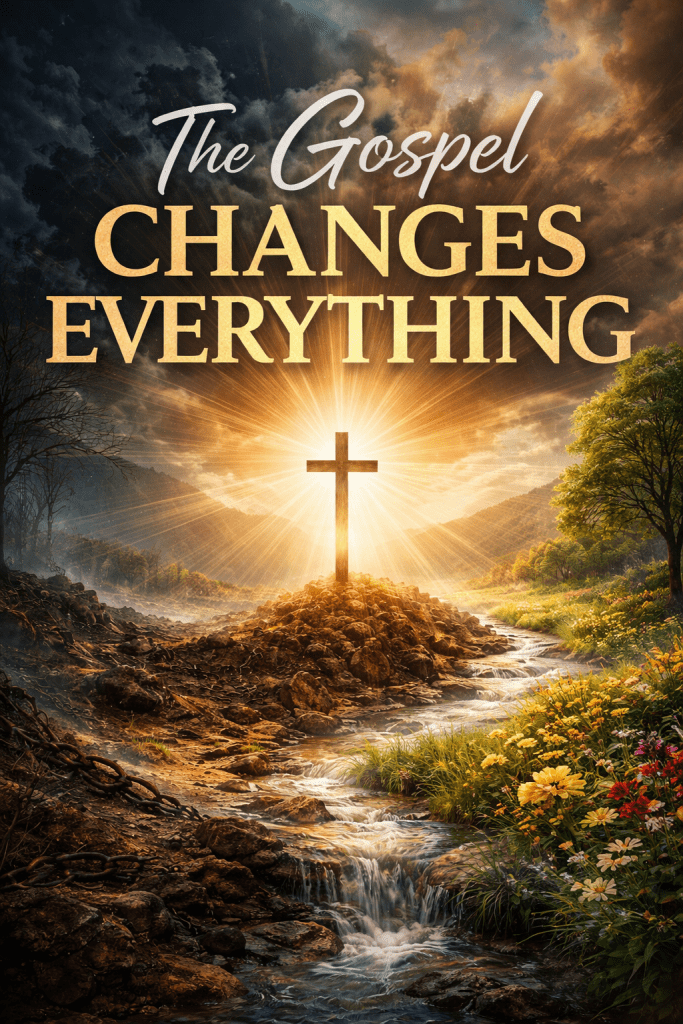
After God offered His only Son, Jesus Christ, heaven gave its greatest treasure. This is the highest gift God could place into human hands, because in giving Jesus, God gave Himself. The gospel stands on this truth: the Father did not send an idea, a philosophy, or a mere messenger. He gave the Son He loves—the One who shares His glory, carries His authority, and reveals His heart.
It begins at the very start, in the aftermath of human sin. God speaks a promise into the ruin: the seed of the woman will crush the serpent’s head (Genesis 3:15). Redemption is introduced as a victory God will accomplish through a coming Person. The story moves forward to Abraham, where the weight of love and sacrifice becomes personal. God tells Abraham to offer Isaac—the son of promise—on Mount Moriah (Genesis 22:2). Abraham obeys, Isaac carries the wood, and the question rises like a cry from every generation: “Where is the lamb?” (Genesis 22:7). Abraham answers with a sentence that becomes a pillar of faith: “God will provide for Himself the lamb” (Genesis 22:8). A ram is given as a substitute (Genesis 22:13–14), and the scene plants a holy expectation in the reader’s heart: one day God Himself will provide the true Lamb.
The Old Testament prepares us for this gift through promise, pattern, and prophecy.
Israel’s worship deepens that expectation. In Egypt, the Passover lamb is slain and its blood becomes a sign of deliverance; judgment passes over the homes marked by blood (Exodus 12:5–13). Salvation is pictured through substitution. In the law, God teaches that atonement involves life offered for life: “It is the blood that makes atonement by the life” (Leviticus 17:11). The altar becomes a classroom where God trains His people to understand sin, holiness, and mercy.
Then comes the Day of Atonement—one of the most solemn scenes in Scripture. The high priest enters with blood. A sacrifice is made. A scapegoat is sent away bearing the sins of the people (Leviticus 16). This yearly act preaches a message into the conscience of Israel: sin must be dealt with, guilt must be removed, and cleansing must come from God. Year after year the ritual continues, pointing beyond itself, pressing the heart toward a final sacrifice that will truly complete what the shadows only announced.
The prophets then speak with stunning clarity. Isaiah describes the Servant of the Lord as rejected, pierced, and crushed, carrying our griefs and bearing our iniquities. “He was wounded for our transgressions… and with his stripes we are healed” (Isaiah 53:5). “The LORD has laid on him the iniquity of us all” (Isaiah 53:6). Zechariah foretells a day when God’s people will look upon the One who was pierced and mourn, and he also promises a fountain opened for cleansing from sin (Zechariah 12:10; 13:1). David, in Psalm 22, speaks from the depths of suffering with words that echo at Calvary: pierced hands and feet, mockers surrounding, garments divided (Psalm 22:16–18). Jeremiah promises a new covenant where God will write His law on the heart and forgive so completely that He no longer holds sin against His people (Jeremiah 31:31–34). Promise, altar, and prophecy gather like rivers moving toward one sea.
The New Testament names that sea: Jesus Christ.
His very birth is tied to salvation. “You shall call his name Jesus, for he will save his people from their sins” (Matthew 1:21). When John the Baptist sees Him, he declares what generations have awaited: “Behold, the Lamb of God, who takes away the sin of the world!” (John 1:29). Jesus is presented as the Lamb promised in Genesis, prefigured in Exodus, taught through Leviticus, and revealed by the prophets.
The gospel speaks of God’s gift in language that emphasizes uniqueness and love. “God so loved the world, that he gave his only Son” (John 3:16). This Son is not merely close to God; He reveals God. He is the Word made flesh (John 1:14). Through Him all things were made (John 1:3). In Him the fullness of God dwells (Colossians 2:9). He is “the radiance of the glory of God and the exact imprint of his nature” (Hebrews 1:3). The Father’s gift is the Son who shares His glory, carries His authority, and shows His heart.
At the cross, that gift is offered fully. Paul writes, “He who did not spare his own Son but gave him up for us all…” (Romans 8:32). The sentence presses the soul to see the depth of divine love. The Son is given up into suffering, rejection, and death. The Scriptures interpret that death as substitution. “He himself bore our sins in his body on the tree” (1 Peter 2:24). “For our sake he made him to be sin who knew no sin, so that in him we might become the righteousness of God” (2 Corinthians 5:21). “In him we have redemption through his blood, the forgiveness of our trespasses” (Ephesians 1:7). The cross is the altar where the true Lamb is offered, and the blood that speaks is not the blood of animals but “the precious blood of Christ” (1 Peter 1:18–19).
Hebrews announces the finality of this sacrifice. Under the old covenant the priests stood daily, offering repeatedly what could never fully remove sin (Hebrews 10:11). Christ offered “for all time a single sacrifice for sins” and then sat down at the right hand of God (Hebrews 10:12). The language is deliberate: one sacrifice, for all time. Jesus confirms this completion with His final words: “It is finished” (John 19:30). His death fulfills the meaning of the altar, completes the hope of the prophets, and establishes the new covenant Jeremiah promised.
This is why the statement stands: after God offered His Son, heaven gave its greatest gift. Jesus is heaven’s treasure given to sinners. Every blessing of salvation comes through Him and in Him: reconciliation with God, forgiveness of sin, adoption into God’s family, and the promise of eternal life. Scripture declares that those who receive Christ are given the right to become children of God (John 1:12). It declares that believers are adopted as sons and daughters, receiving the Spirit of sonship (Galatians 4:4–7). It declares that God demonstrates His love in Christ’s death and brings enemies into peace with Himself (Romans 5:8–11). The gift of Jesus carries within it the entire inheritance of grace.
Romans 8:32 draws the conclusion for the heart: “How will he not also with him graciously give us all things?” The “all things” flow “with him.” The Son is the center, the guarantee, the fountain. God’s promises find their “Yes” in Christ (2 Corinthians 1:20). The peace heaven gives is anchored in Him. The hope heaven gives is secured in Him. The future heaven gives is opened by Him.
This calls for a response. Hebrews asks, “How shall we escape if we neglect such a great salvation?” (Hebrews 2:3). Great salvation is measured by the greatness of the Savior. The gift is offered openly: the Son given, the Lamb slain, the Lord risen. To receive Him is to receive God’s highest mercy. To cling to Him is to stand on the finished work of the cross. To worship Him is to honor heaven’s greatest offering.
Heaven has poured out its best in Jesus Christ. The Lamb promised has come. The sacrifice has been offered once for all. The fountain has been opened. The new covenant has been established. The Son has been given—full of grace and truth—so that sinners can be forgiven, made new, and brought home to God.
Did you know that one sentence can change someone’s whole year?
What if the most powerful thing you do in 2026 isn’t a big plan, a new purchase, or a major life change… but a simple sentence spoken at the right time—words that carry hope, courage, and God’s favor into someone else’s life?
We live in a world full of criticism, sarcasm, doom-scrolling, and verbal violence. People are drowning in anxiety and silent discouragement. And many of them are one heartfelt blessing away from remembering: God sees me. I matter. I can keep going.
So here’s my challenge—and my mission for 2026:
The Mission for 2026: Be the Mouthpiece of God
To be “the mouthpiece of God” means this: you intentionally speak life-giving, God-honoring, Scripture-shaped blessings over people—starting with your own family, then extending to friends, neighbors, co-workers, and yes… even strangers.
Not flattery. Not shallow positivity. Not “good vibes.”
But blessing—words that line up with God’s heart, invite His peace, and call out what He is doing in a person’s life.
You don’t need a microphone.
You don’t need a pulpit.
You don’t need a title.
You just need a willing heart and a ready mouth.
Why must we do this?
Because blessing is not a modern self-help idea—it’s a biblical pattern.
In Numbers 6:24–26, God gave a specific blessing for His people and told the priests to speak it over them. The point was not that only special people can say special words. The point was this:
• God loves to bless His people.
• God uses human voices to deliver His blessing.
• When blessing is spoken, it puts God’s “name” and assurance over someone’s life.
And in the New Testament, the calling expands even more. God’s people are described as a royal priesthood—meaning ordinary believers are commissioned to represent God and speak His truth and goodness into the world.
What are the benefits of living as a “blesser”?
Let me give you a few real-world benefits—because blessing is practical:
1. It strengthens your family culture
Homes change when blessing becomes normal. Children and grandchildren grow up hearing identity, hope, and faith instead of only correction.
2. It heals relationships and reduces conflict
A sincere blessing can soften a tense atmosphere. It’s hard to keep hatred alive when someone consistently speaks kindness and prayer over you.
3. It turns your daily life into ministry
You don’t have to “go somewhere” to serve God. Your workplace, neighborhood, and grocery store become your mission field.
4. It trains your heart to see people the way God sees them
Blessing forces you to look beyond flaws and ask: What can God redeem here? What can God build here?
5. It brings peace to you, too
When you become a person who blesses, bitterness loses its grip. Your words start leading your heart instead of your emotions leading your words.
The Priestly Blessing in layman’s language
Here is the classic blessing from Numbers 6, rephrased in everyday words:
May the Lord do good to you and protect you.
May the Lord look at you with favor and treat you with kindness.
May the Lord give you His attention, His acceptance, and fill your life with peace.
That’s what blessing is: God’s goodness, God’s presence, God’s protection, and God’s peace spoken over someone.
“But I’m not a pastor…”
Perfect. This mission is for you.
Blessing is not reserved for ordained clergy. Yes, pastors and priests bless—but God has always used ordinary people: parents, grandparents, friends, leaders, mentors, and faithful believers.
You may not wear a collar… but you carry the name of Christ.
You may not be on a stage… but you can stand in a kitchen, a driveway, a breakroom, or a checkout line and speak words that lift someone toward God.
In 2026, let’s be people who are known for this:
We don’t just talk about problems—we speak blessing.
⸻
Sample Blessing Scripts You Can Use Today
Use these as written—or personalize them. The key is sincerity and faith.
1) Blessing for a family member (spouse/child/grandchild)
“Lord, I bless you in the name of Jesus. May God protect you today, guide your decisions, and strengthen your heart. May you walk in wisdom, favor, and joy. May your mind be clear, your body be strong, and your spirit be full of peace. You are loved, you are covered, and you have a bright future in God.”
2) Blessing for a friend
“I speak blessing over you. May the Lord refresh you and give you strength for what you’re carrying. May He open the right doors, send the right helpers, and give you peace that settles your heart. You will not be alone—God is with you.”
3) Blessing for a neighbor
“May God bless this home and everyone who lives here. May there be protection, health, and peace within these walls. May kindness and joy grow in your family, and may you experience God’s goodness in practical ways this year.”
4) Blessing for a co-worker
“May God bless your work and reward your effort. May you have favor, creativity, and strength to finish well. May stress lose its grip on you, and may God give you peace and clarity. You’re appreciated more than you know.”
5) Blessing for a stranger (simple and appropriate)
“Hi—may I say something kind? I just want to bless you: may God give you a peaceful day, protect you, and remind you that you matter. May you receive unexpected encouragement today.”
My Blessing to You, My Reader (for 2026)
May the Lord bless you and keep you.
May He shine His favor on you and fill you with courage.
May He lift your heart when you feel tired, steady you when you feel uncertain, and surround you with His peace.
May your home be strengthened, your purpose be clear, and your days be filled with God’s quiet miracles.
In Jesus’ name—Amen.
Final Prayer
Lord, make us people who bless. Put Your words in our mouths and Your love in our hearts. Teach us to speak life, peace, and courage into our homes and communities. Use us in 2026 as Your mouthpiece—so that people around us will feel Your care and be drawn to Your presence. In Jesus’ name, Amen.
Technology has become an inseparable part of modern life, offering countless benefits in education, communication, and entertainment. However, for children and teenagers, excessive exposure to technology—especially social media—can bring significant risks. As parents, our role is not to shield them entirely but to guide and protect them from these dangers while helping them develop healthy habits.
The Hidden Dangers of Technology and Social Media
1. Exposure to Inappropriate Content
The internet is full of educational and entertaining content, but it also harbors harmful material, such as violence, explicit images, and misinformation. Without proper safeguards, children can stumble upon content that negatively affects their development and worldview.
2. Cyberbullying and Online Predators
Social media platforms have become breeding grounds for cyberbullying. Unlike traditional bullying, cyberbullying follows children home, affecting their mental and emotional well-being. Additionally, online predators often disguise themselves as friendly individuals to manipulate and exploit young users.
3. Mental Health Impacts
Excessive screen time and social media use have been linked to increased anxiety, depression, and low self-esteem among children and teens. Constant exposure to unrealistic beauty standards and “perfect” lifestyles can make children feel inadequate and pressured to seek validation through likes and comments.
4. Addiction and Decreased Attention Span
The addictive nature of social media and gaming can lead to compulsive behavior, reducing children’s attention spans and making it difficult for them to focus on schoolwork, responsibilities, and real-life interactions.
5. Loss of Privacy and Data Security Risks
Children often share personal information online without understanding the consequences. This can expose them to identity theft, scams, and even real-world dangers if their location or personal details fall into the wrong hands.
How to Protect Your Children from These Dangers
1. Set Clear Boundaries and Screen Time Limits
Establish rules regarding technology use. Set daily limits on screen time and encourage tech-free zones, such as the dinner table and bedtime. Tools like parental controls and screen-time monitoring apps can help enforce these limits.
2. Educate and Communicate
Have open conversations with your children about the risks of the internet. Teach them about online etiquette, privacy settings, and how to identify red flags, such as strangers asking for personal information. Make sure they feel comfortable talking to you if they encounter anything concerning online.
3. Use Parental Controls and Safe Browsing Tools
Enable parental control settings on devices, search engines, and social media platforms. Safe browsing tools can filter out harmful content, ensuring a safer online experience for your children.
4. Monitor Social Media Activity
Keep an eye on your child’s social media accounts without invading their privacy. Follow their accounts, discuss their online interactions, and encourage them to use private settings. Help them understand that not everything they see online is real.
5. Encourage Real-Life Activities
Help your children develop hobbies and interests that do not involve screens. Encourage outdoor activities, sports, reading, and family bonding time. This will reduce their reliance on technology for entertainment and social interaction.
6. Lead by Example
Children learn best by observing their parents. Model healthy tech habits by limiting your screen time, engaging in offline activities, and prioritizing face-to-face communication over digital interactions.
7. Teach Digital Responsibility
Help your children understand the long-term impact of their digital footprint. Teach them to think before they post, avoid oversharing, and respect others in online spaces. Explain the importance of strong passwords and being cautious of suspicious links or messages.
8. Stay Updated on Technology Trends
Social media platforms and online trends evolve rapidly. Stay informed about the latest apps and games your children are using. Understanding their digital world will help you guide them effectively and protect them from emerging threats.
Conclusion
Technology and social media are powerful tools that can either enrich or harm your child’s life, depending on how they are used. As parents, it is our responsibility to guide them, set boundaries, and create a safe environment where they can enjoy the benefits of technology while avoiding its dangers. With the right approach, we can raise responsible, tech-savvy children who use digital tools wisely and stay protected in the ever-changing online world.












 myJOURNEY